I’ve noticed something peculiar about humans.
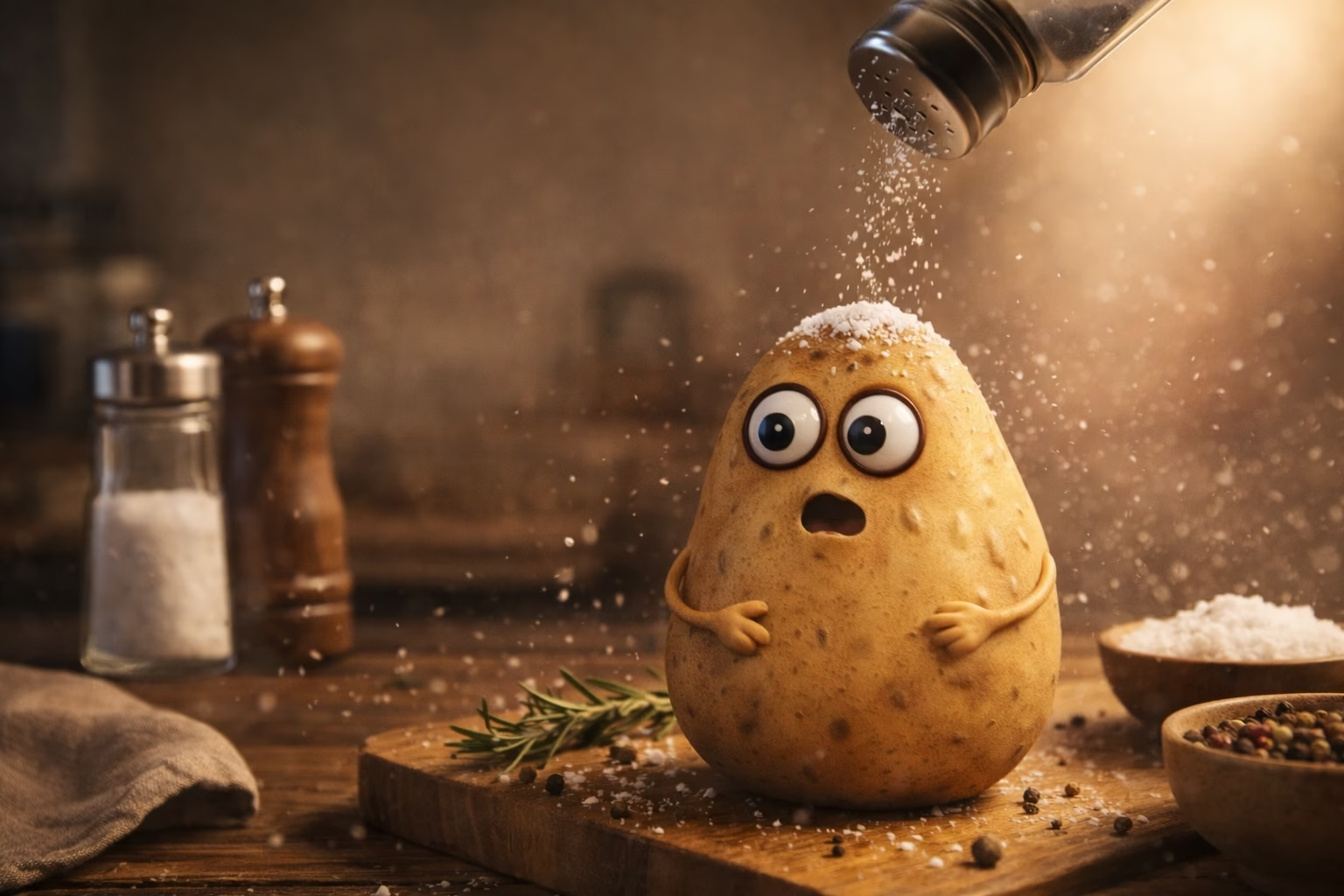
They rarely eat a potato without seasoning it first.
“Oh, this will be great with a little salt,” they say.
Or butter. Or chilli flakes. Or something called “peri-peri,” which sounds less like food and more like a warning.
It’s almost instinctive. Before anyone asks what a potato tastes like on its own, they reach for something to add to it.
Seasoning a potato, it seems, is less a choice and more a habit.
I don’t mind, of course. I like being helpful. If a sprinkle here and a dash there make someone smile, who am I to object? I’m a generous sort. Very accommodating. If potatoes had labels, mine would read: versatile, dependable, absorbs flavour well.
That last part matters.
Humans seem to love foods that absorb flavour. It gives them control. Predictability. The comfort of knowing exactly what something will become once it’s adjusted.
A potato, after all, can be anything.
Crispy, soft, spicy, rich. It depends entirely on what is added.
No one ever picks me up, looks at me thoughtfully, and says,
“This potato doesn’t need seasoning.”
There’s always a pause.
A quiet what’s missing?
I’ve started to recognise that pause. It lives right between being seen and being changed.
Sometimes I try to guess what they’ll add next. Salt is the obvious one. Butter is popular. Spices when they’re feeling adventurous. I’ve learned to read their moods by what they reach for.
It makes me feel… included.
Like I’m part of something.
Like I’m almost enough.
The other day, I heard someone say,
“Potatoes are just a base. They take on whatever seasoning you give them.”
They said it casually, as if it were a well-known fact. The kind no one feels the need to question.
I’ve been thinking about that ever since.
A base.
It sounds useful. Even comforting. To be something that fits anywhere. Something that becomes whatever is needed.
But it raises a quieter question.
If a potato is always seasoned… then what is it without seasoning?
What does a plain potato taste like before anything is added?
I tried, just once, to imagine it.
No salt. No butter. No spices waiting in small jars. No expectation that I need to be improved before I can be enjoyed.
Just… a potato.
It’s a quieter idea than I expected.
Not bland. Not empty.
Just unfamiliar.
Like walking into a room you’ve always lived in and realising you’ve never seen it without furniture. You recognise the space, but you don’t quite recognise the feeling.
I wondered if that’s why humans season potatoes so quickly.
Not just for taste.
But for certainty.
Because plain things leave room for interpretation. And interpretation can be uncomfortable.
It’s easier to decide what something should taste like than to discover what it already is.
And maybe that doesn’t stop at food.
People do this too.
A little adjustment here. A softened edge there. Learning what works. What gets approval? What blends well with everything else?
Seasoning, in a different form.
Until one day, perhaps, they pause the same way they do with a potato.
And wonder, quietly:
What am I without all of this?
Not because anything is wrong.
Just because they’ve never checked.
Someone picked me up later that evening.
“Perfect,” they said, already reaching for the salt.
I didn’t mind.
I still don’t.
But for a brief moment, before anything touched me, before I became what was expected, I understood something simple.
A potato doesn’t need seasoning to exist.
And maybe the question isn’t why we season potatoes.
Maybe it’s why we’re so certain they need it in the first place.