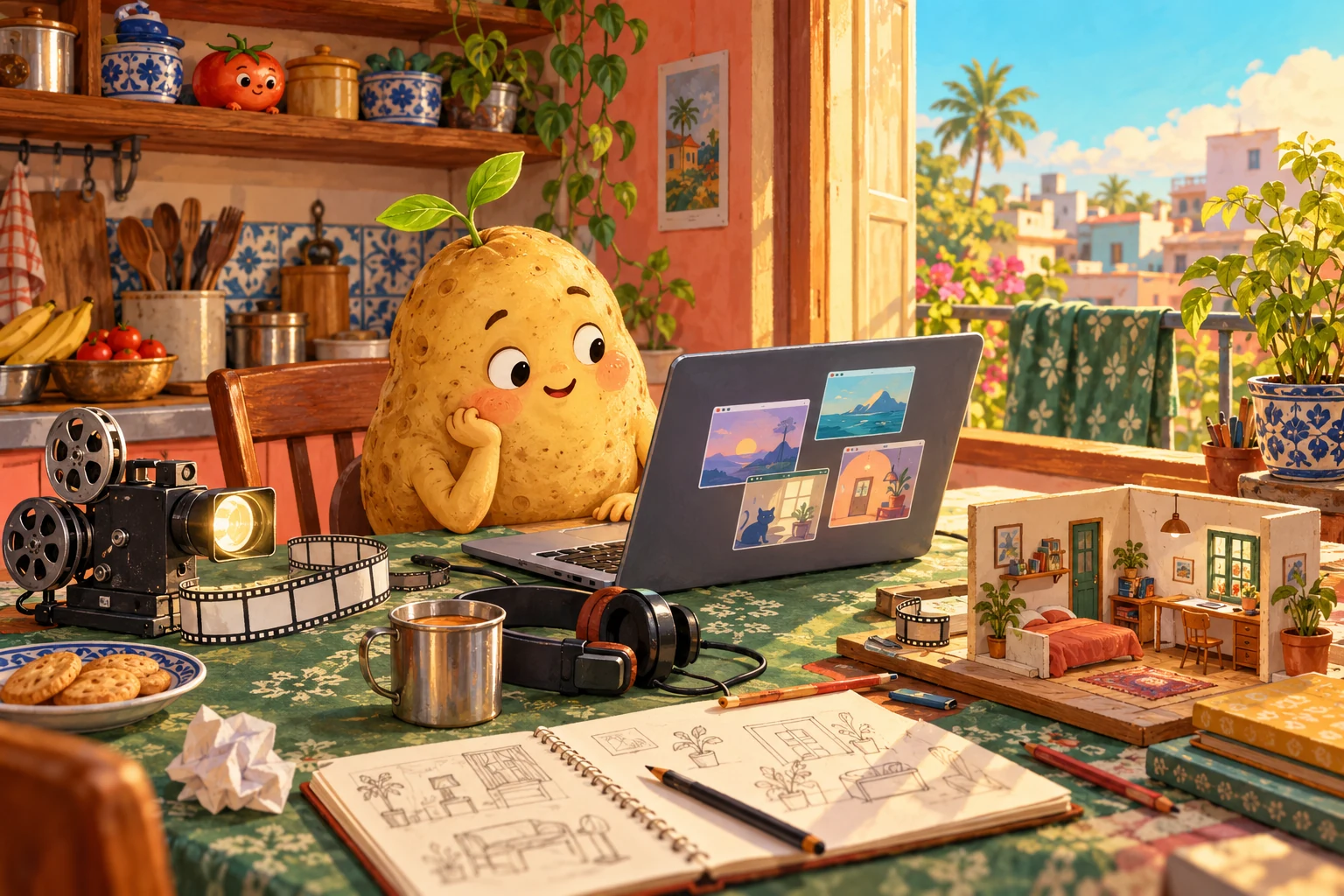
The potato opened the laptop to ask one small question. He had left his tea within reach, cleared enough table for his elbows, and promised the kettle that this would take ten minutes. The question concerned something he did not know how to make, which described a fair amount of his life at the time. A box on the screen invited him to explain what he had in mind. He typed a sentence, deleted the impressive part, and tried again. The box replied with a suggestion he could understand. He leaned closer. By the time the kettle clicked, he had opened another tab and begun moving the fruit bowl to make room.
He had used artificial intelligence before, mostly to ask things he could have looked up if he knew which words to search for. Lately, the questions had become less respectable. Could this scrap of an idea become something someone could watch? Could a sound end here without the next one arriving like a steel plate dropped down the stairs? Could the little room he had imagined contain a visitor who went where they pleased? The box entertained these questions without asking for his qualifications. The potato appreciated that. He had a notebook full of things he wanted to try and very little experience of being the sort of vegetable who tried them.
For some time, he had assumed other people received instructions before starting. Somewhere, he imagined, there was a desk at which a capable person checked your background and issued permission to make a thing. He had been waiting for a letter. Instead, here was a box asking what happened when he pressed a particular button, and here was the button, available without an interview. He tried it. The first result looked dreadful, but he recognised something he had meant. He changed one piece and tried again. The tomato, watching from beside the fruit bowl, asked whether he knew what he was doing. The potato said he knew what he was doing next, and hoped that would cover the distinction.
One corner of the table became a small cinema. He collected questions about familiar things: old machines, strange habits, the bits of an ordinary object that became interesting once someone asked how they got there. He wanted to tell those stories with pictures and a voice, so he began fitting them together. The voice did not come from his own throat, a practical arrangement for a potato whose public speaking experience consisted of disagreeing with a pressure cooker. Hearing the words aloud changed them. A line that had looked thoughtful on the page sounded as though it had been waiting to open a conference. He rewrote it. Then he moved a picture, shortened a pause, and watched the whole thing from the beginning instead of trusting the nicest thirty seconds.
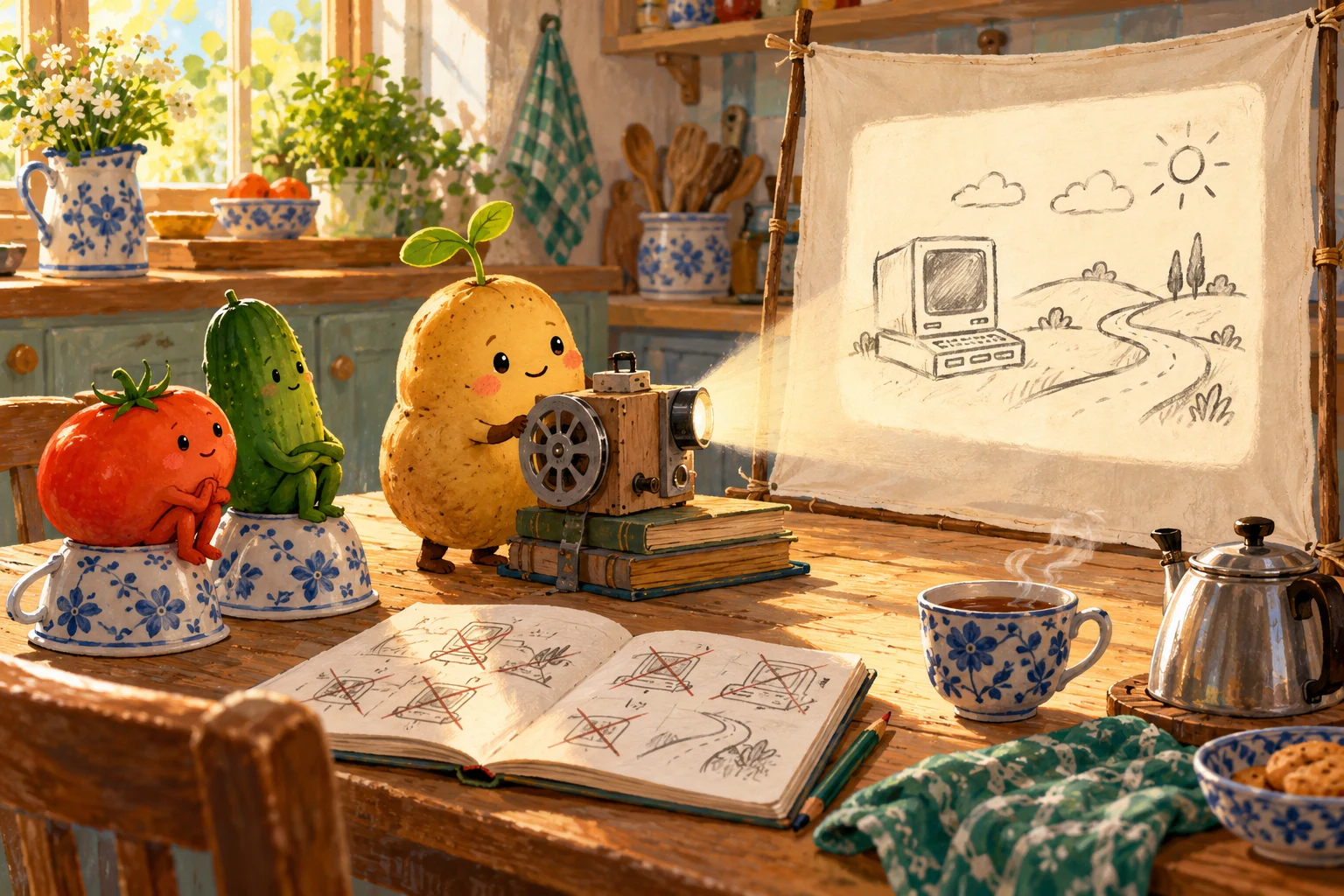
The helpful box could supply a convincing explanation before the potato had finished doubting the question. This was useful until he checked one. He followed a reference, then another, and discovered that the confidence had travelled farther than the evidence. The tomato suggested keeping the sentence because it sounded good. The potato considered the screen, where the sentence still looked as pleased with itself as before. Someone watching might believe it. He removed it, found what he could support, and rebuilt the little scene. The afternoon went into a correction that a viewer would never notice, though a viewer noticing the original mistake would have been considerably worse.
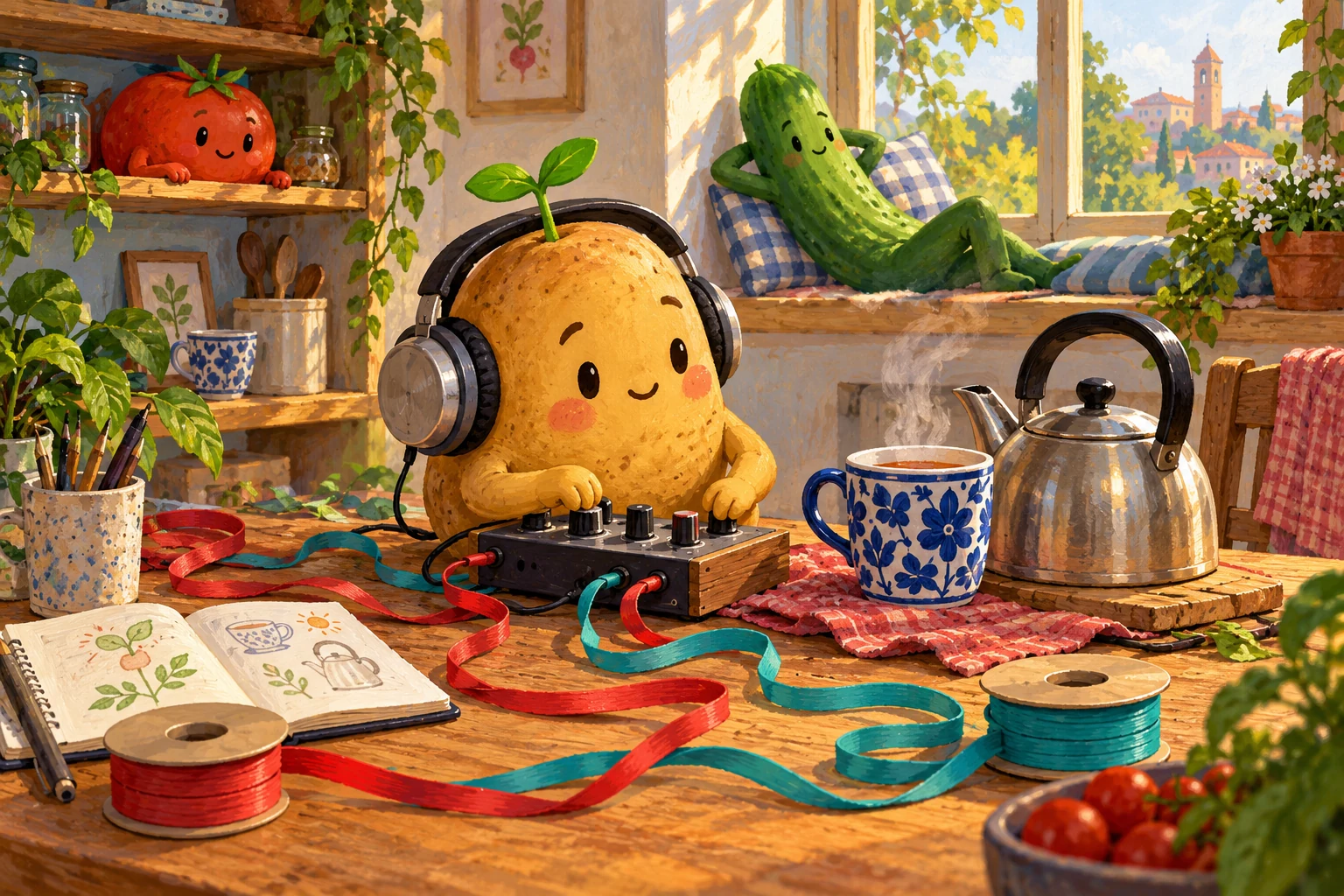
Elsewhere on the table, he was trying to persuade sounds to share an evening. He listened through headphones, joining one piece to another until the change felt natural. On the screen, the neat shapes met without complaint. In his ears, the second piece arrived as though somebody had kicked open the kitchen door. He adjusted the join, listened again, and took off the headphones to make sure the kettle had not contributed anything. The box offered methods and settings, some of which helped. His ears still had to attend. After several attempts, he found a version that let the room keep moving, and caught himself nodding along before remembering that he was meant to be checking it.
Some experiments had already travelled farther. There was a little building he could open on the screen, with rooms he remembered making badly before he learned to make them better. A visitor could enter it now, choose where to look, and leave without asking his permission. He still felt surprised by this. The same table that held a half-cut lemon had become the place from which he had sent out an entire building. Yet on other afternoons he spent an hour failing to change something that appeared to involve three words and a square. Progress remained uneven. He had begun keeping notes for the version of himself who would return tomorrow and confidently repeat yesterday’s mistake.
The table filled up. There were rough pictures, scraps of narration, a page of timings, and a folder whose name contained the word final often enough to suggest a dispute. The potato liked moving between them. A question from one experiment sometimes helped another; listening to a clumsy sentence made him more careful about a conversation elsewhere. Occasionally he mistook this pleasant traffic for a reason to begin something new. A fresh project offered a generous period during which nothing had gone wrong. He could spend an evening choosing its name while the older work sat beside him, waiting for the less entertaining business of being finished. The kettle began asking which thing he intended to return to after tea.
One evening, the box gave him a plan for improving a small piece he had nearly completed. The plan had headings, sensible steps, and enough new work to take possession of the weekend. He read it twice, feeling the familiar mixture of possibility and mild personal failure. Perhaps the thing needed all of this. Then he watched what he already had. There was a weak passage in the middle, but he liked the opening, and the ending landed where he wanted it to. He asked for help with the middle. The smaller answer gave him something he could use that night, and left Saturday available for purposes he had not yet agreed to surrender.
He found he got better help when he brought something specific: the sentence that sounded wrong, the sound that jumped, the corner where a visitor got stuck. He could ask another question without pretending he had understood the first answer. He could try an unfamiliar process on a rough version and keep the one that worked. This suited him. At school, he had often understood a lesson shortly after everyone had moved on to the next one. Here he could remain with the difficult part, taking it apart and asking again, while the kitchen went about its evening. Sometimes he needed an explanation without the terminology. Sometimes he needed to close the box and see what happened when he tried it himself.
He still had to choose what he cared about. The box could make a dull passage longer with remarkable efficiency, and he could spend an hour polishing a picture that belonged in the bin. Nobody reached through the screen to stop him. Gradually, he began setting aside the versions that looked accomplished but left him cold. He kept the awkward joke that made him laugh, the detail he wanted to investigate, and the quiet pause that another suggestion had tried to fill. He also kept a list of things to check before showing anyone. The list was less exciting than the ideas notebook, but he found it useful on evenings when enthusiasm began making decisions on his behalf.
By the end of the week, the potato had something small he could show, something else that still needed fixing, and an idea he had managed to leave in pencil. None of it resembled the confident future he used to imagine for people who knew what they were doing. He was enjoying himself, though. He had spent part of an afternoon following a question he cared about and ended up making something that had not existed beside the fruit bowl that morning. When the box offered to help him plan the next stage, he left the suggestion unread. The cucumber had cut a lemon for the tea, and the tomato was arguing that a biscuit broken in half counted as two. The potato closed the laptop and joined them. Before sitting down, he moved the fruit bowl back to its place, where it covered his newest page of ideas rather well.